
Early in development, the embryonic mesoderm differentiates into three distinct regions: paraxial mesoderm, intermediate mesoderm, and lateral mesoderm. The paraxial mesoderm is a column of tissue situated on either side of the midline of the embryo. At about the 4th week, it divides into blocks of tissue termed somites. Each somite differentiates into a ventromedial part (the sclerotome) and a dorsolateral part (the dermatomyotome). The dermatomyotome next further differentiates into the myotome and the dermatome (Fig. 2.6A).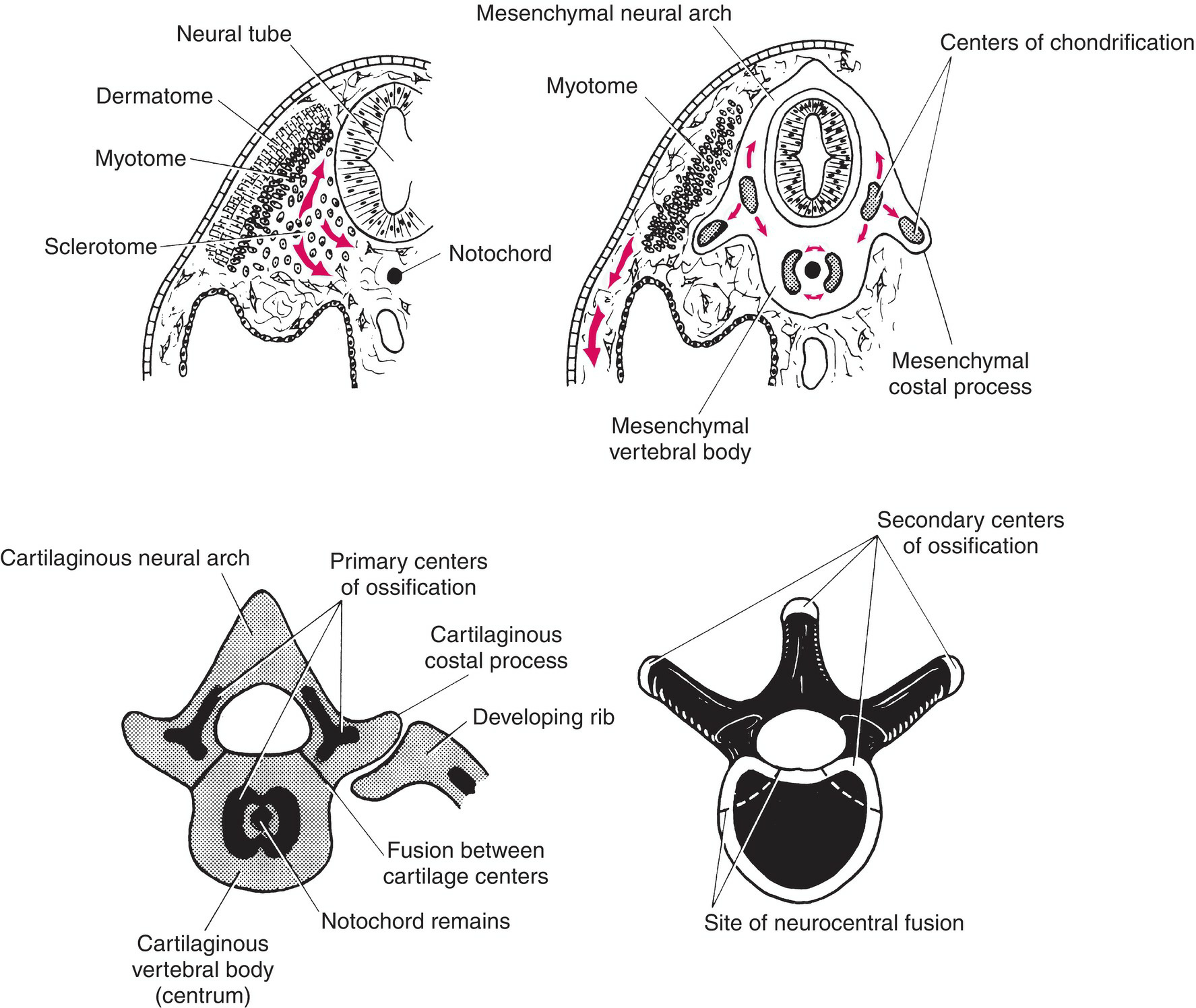
Figure 2.6 The stages in the formation of a thoracic vertebra.
The mesenchymal cells of the sclerotome rapidly divide and migrate medially during the 4th week of development and surround the notochord. The caudal half of each sclerotome now fuses with the cephalic half of the immediately succeeding sclerotome to form the mesenchymal vertebral body (Fig. 2.7; also see Fig. 2.6B). Each vertebral body is thus an intersegmental structure. The notochord degenerates completely in the region of the vertebral body. However, in the intervertebral region, it enlarges to form the nucleus pulposus of the intervertebral disc (see Fig.2.7). The surrounding fibrocartilage, the anulus fibrosus, of the intervertebral disc is derived from sclerotomic mesenchyme situated between adjacent vertebral bodies.
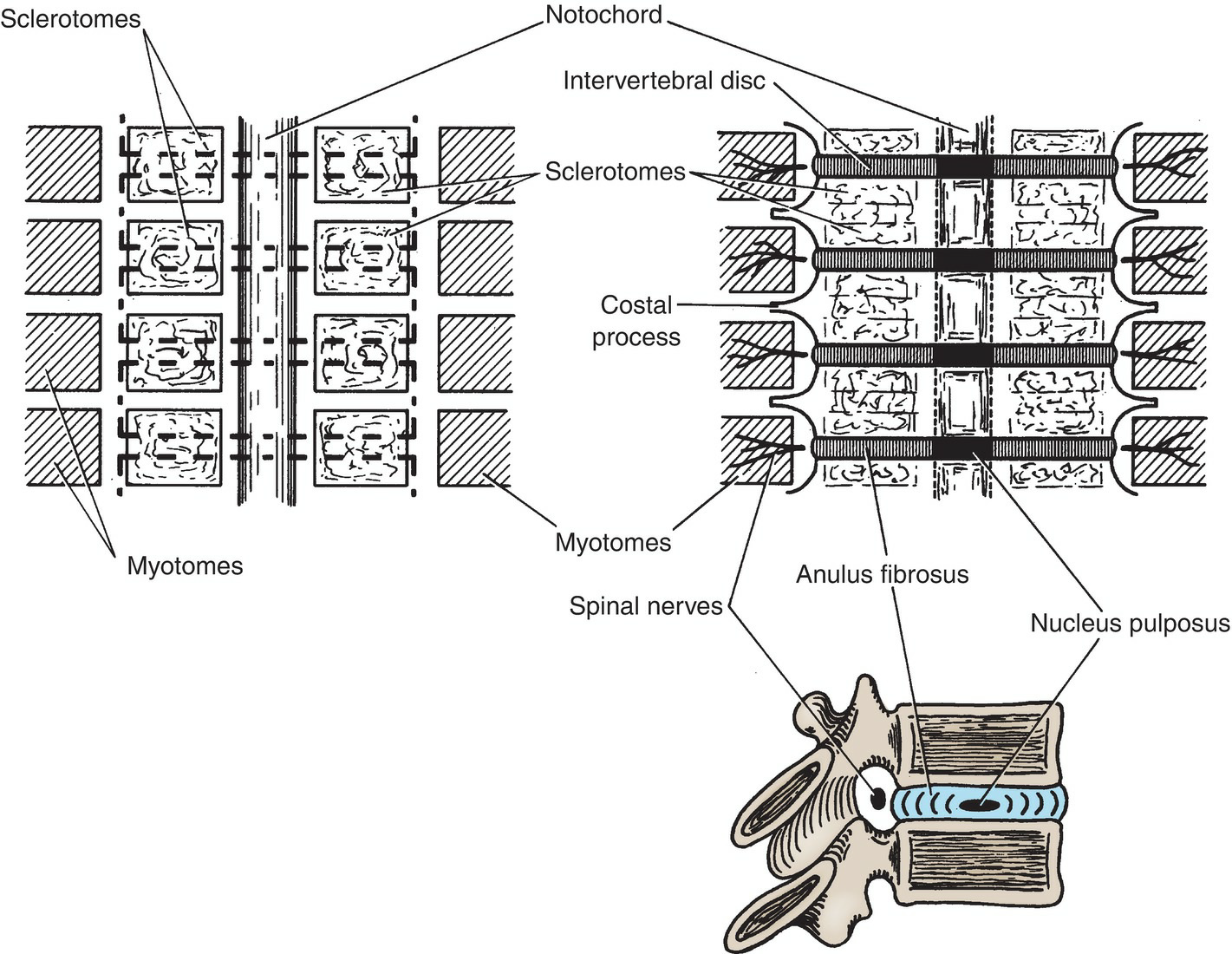
Figure 2.7 The formation of each mesenchymal vertebral body by the fusion of the caudal half of each sclerotome with the cephalic half of the immediately succeeding sclerotome. Each vertebral body is thus an inter segmental structure. The costal processes grow out between adjacent myotomes. Also shown is the close relationship that exists between each spinal nerve and each intervertebral disc.
Meanwhile, the mesenchymal vertebral body gives rise to posterior and lateral outgrowths on each side. The posterior outgrowths grow around the neural tube between the segmental nerves to fuse with their fellows of the opposite side and form the mesenchymal vertebral arch (see Fig. 2.6B,C).
The lateral outgrowths pass between the myotomes to form the mesenchymal costal processes or primordia of the ribs.
Costal Processes
The costal processes contribute to the final vertebral form in region-specific patterns (Table 2.2 and Fig. 2.8).
Table 2.2 Derivatives of Embryonic Costal Processes
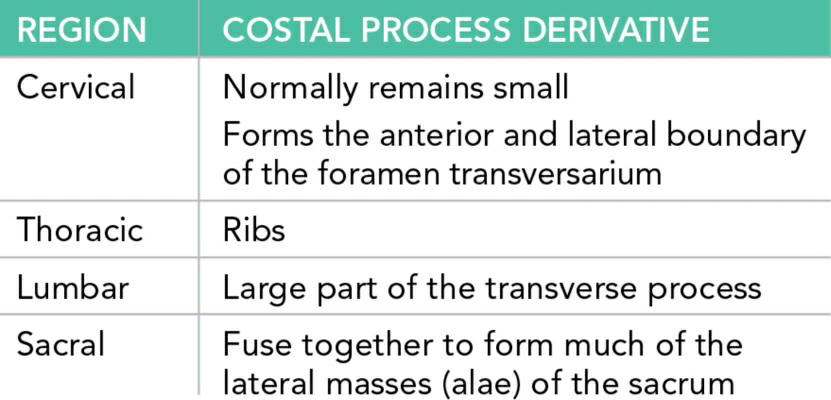
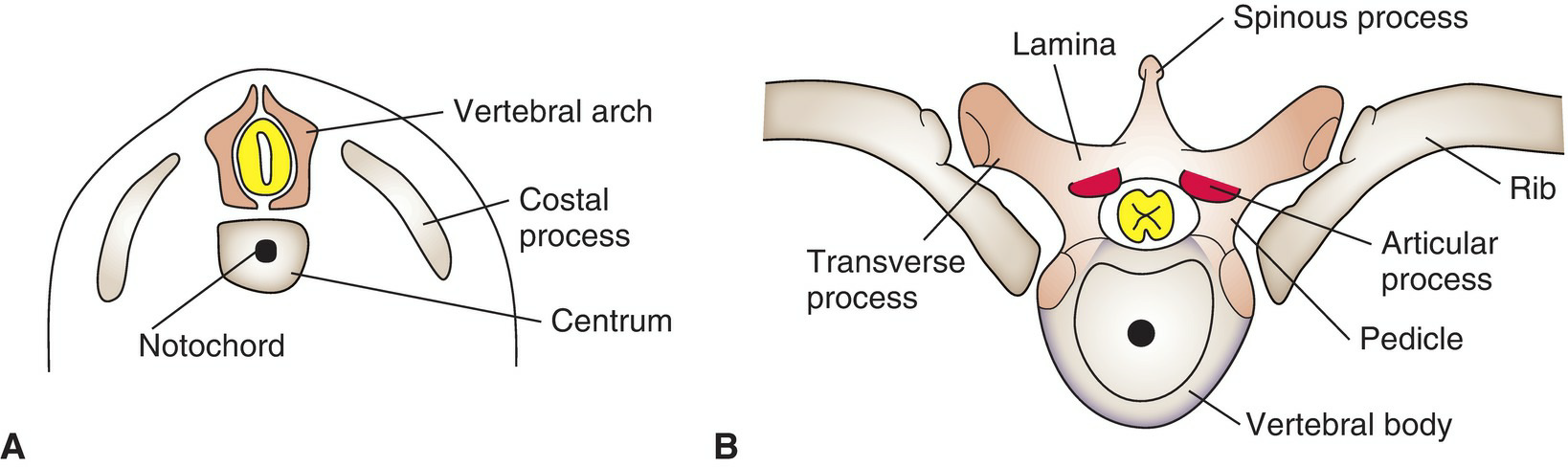
Figure 2.8 Schematic horizontal sections of thoracic vertebrae showing their main developmental components.
Also see Table2.2. A. Three distinct components are present at about 5 to 7weeks: the centrum, vertebral arch, and costal process. B. Adult.
Each component develops into distinct structures, as indicated by the shading.
Abnormal enlargements of the costal processes may occur and form accessory ribs. This happens most often at the L1 and C7 vertebrae. The most common occurrence is formation of a lumbar rib at L1. This is usually an asymptomatic condition. Accessory ribs at C7 are termed cervical ribs. These may be unilateral or bilateral and can range from small fibrous bands to complete bony ribs. Cervical ribs may be asymptomatic, or they may produce neurovascular effects in the upper limb due to compression of the subclavian artery and/or lower trunk of the brachial plexus.
Vertebral Arch
The dorsal outgrowths from the vertebral body may fail to fuse in the posterior midline, leaving a gap in the vertebral arch of one or more adjacent vertebrae. This condition, termed spina bifida, occurs most frequently in the lower thoracic, lumbar, and sacral regions. Underlying this defect, the meninges and spinal cord may or may not be involved in varying degrees. This condition is a result of failure of the mesenchyme, which grows in between the neural tube and the surface ectoderm, to form the vertebral arches in the affected region. The major types of spina bifida are shown in Figures 2.9 and 2.10.
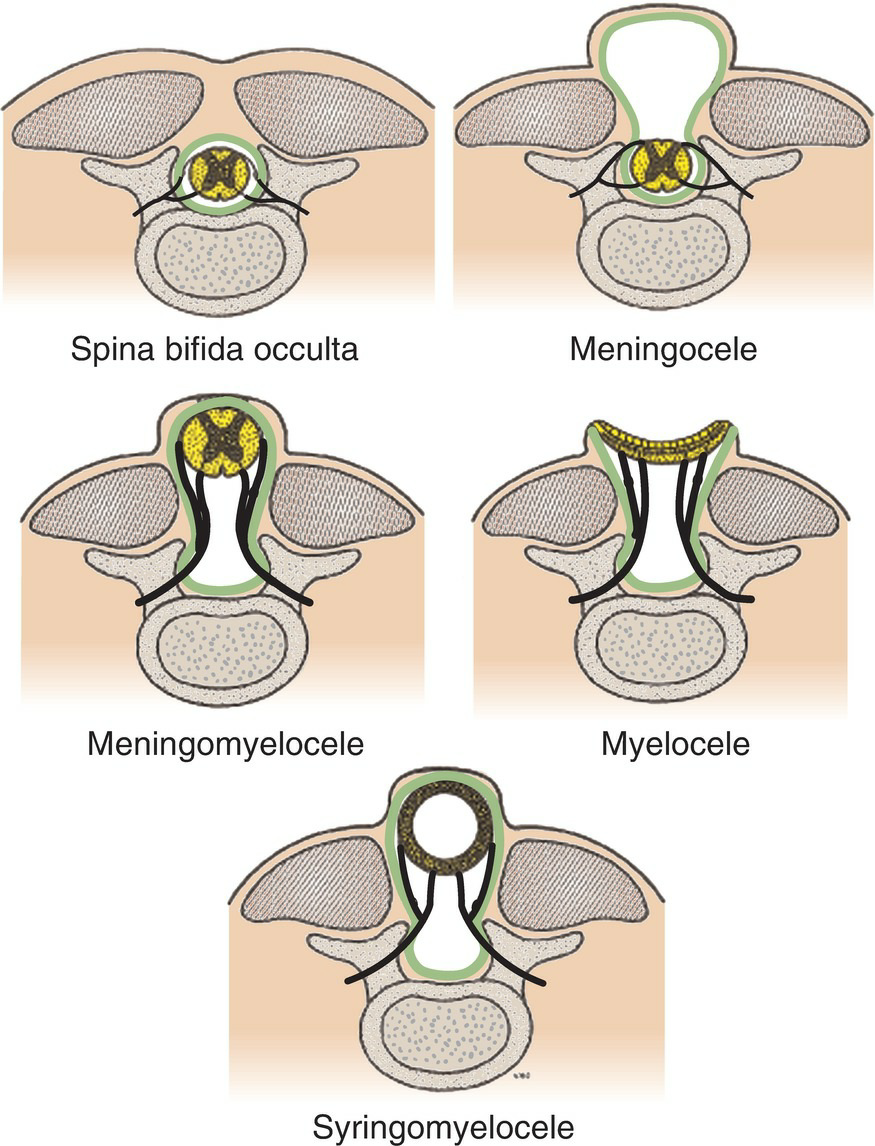
Figure 2.9 Different types of spina bifida.
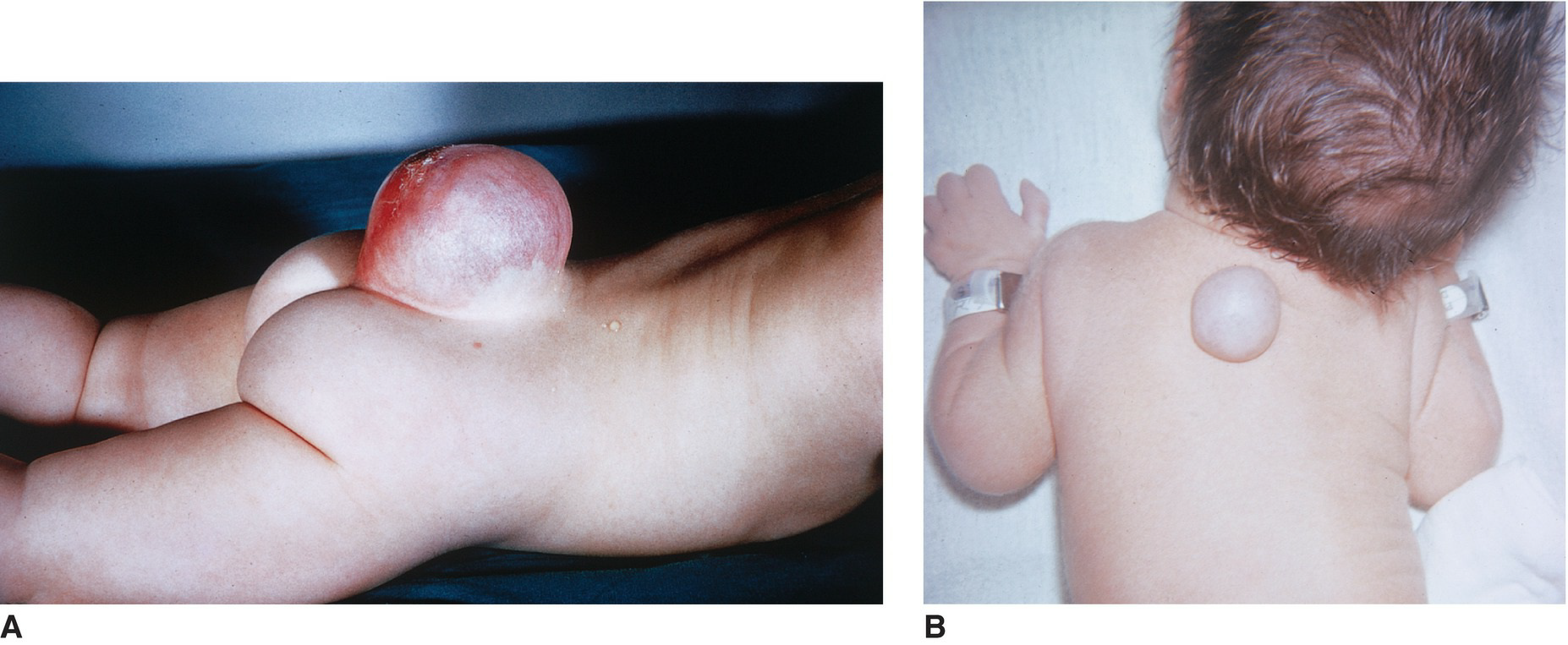
Figure 2.10 A. Meningocele in the lumbosacral region. (Courtesy of L. Thompson.) B. Meningomyelocele in the upper thoracic region. (Courtesy of G. Avery.)
Development Completion
Two centers of chondrification appear in the middle of each mesenchymal vertebral body. These quickly fuse to form a cartilaginous centrum (see Fig. 2.6C). A chondrification center forms in each half of the mesenchymal neural arch and spreads dorsally to fuse behind the neural tube with its fellow of the opposite side. These centers also extend anteriorly to fuse with the cartilaginous centrum and laterally into the costal processes. The condensed mesenchymal or membranous vertebra has thus been converted into a cartilaginous vertebra. At about the 9th week of development, primary ossification centers appear: two for each centum and one for each half of the neural arch. The two centers for the centrum usually unite quickly, but the complete union of all the primary centers does not occur until several years after birth. During adolescence, secondary centers appear in the cartilage covering the superior and inferior ends of the vertebral body, and the epiphyseal plates are formed. A secondary center also appears at the tip of each transverse process and at the tip of the spinous process (see Fig. 2.6D). By the 25th year, all the secondary centers have fused with the rest of the vertebra.
The atlas and axis develop somewhat differently. The centrum of the atlas fuses with that of the axis and becomes the odontoid process. This leaves only the vertebral arch remaining of the atlas, which grows anteriorly and finally fuses in the midline to form the characteristic ring shape of the atlas vertebra. In the sacral region, the bodies of the individual vertebrae are separated from each other in early life by intervertebral discs. At about the 18th year, the bodies start to become united by bone. This process starts caudally. Usually by the 13th year, all the sacral vertebrae are united. In the coccygeal region, segmental fusion also takes place, and, in later life, the coccyx commonly fuses with the sacrum.