
A peritoneal diverticulum called the processus vaginalis forms before the descent of the testis and the ovary from their site of origin high on the posterior abdominal wall (L1) (Fig. 6.25).
The processus vaginalis passes through the layers of the lower part of the anterior abdominal wall and, as it does so, acquires a tubular covering from each layer. It traverses the transversalis fascia at the deep inguinal ring and acquires a tubular covering, the internal spermatic fascia (see Fig. 6.11).
As it passes through the lower part of the internal oblique muscle, it takes with it some of its lowest fibers, which form the cremaster muscle. The muscle fibers are embedded in fascia, and thus the second tubular sheath is known as the cremasteric fascia (see Fig. 6.11). The processus vaginalis passes under the arching fibers of the transversus abdominis muscle and therefore does not acquire acovering from this abdominal layer.
On reaching the aponeurosis of the external oblique, it evaginates this to form the superficial inguinal ring and acquires a third tubular fascial coat, the external spermatic fascia (see Figs. 6.11 and 6.12).
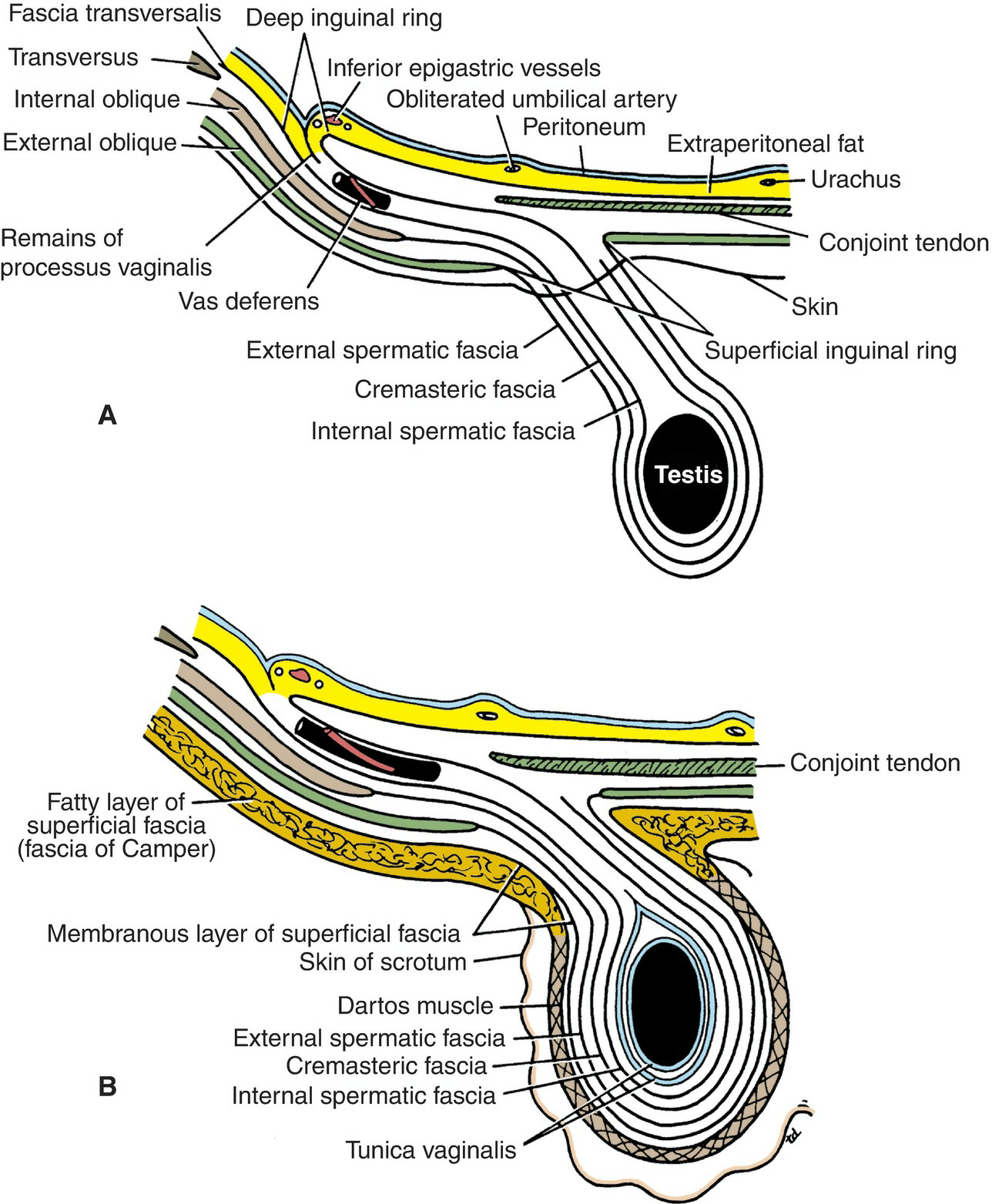
Figure 6.11 A. Continuity of the different layers of the anterior abdominal wall with coverings of the spermatic cord. B. The skin and superficial fascia of the abdominal wall and scrotum have been included, and the tunica vaginalis is shown.
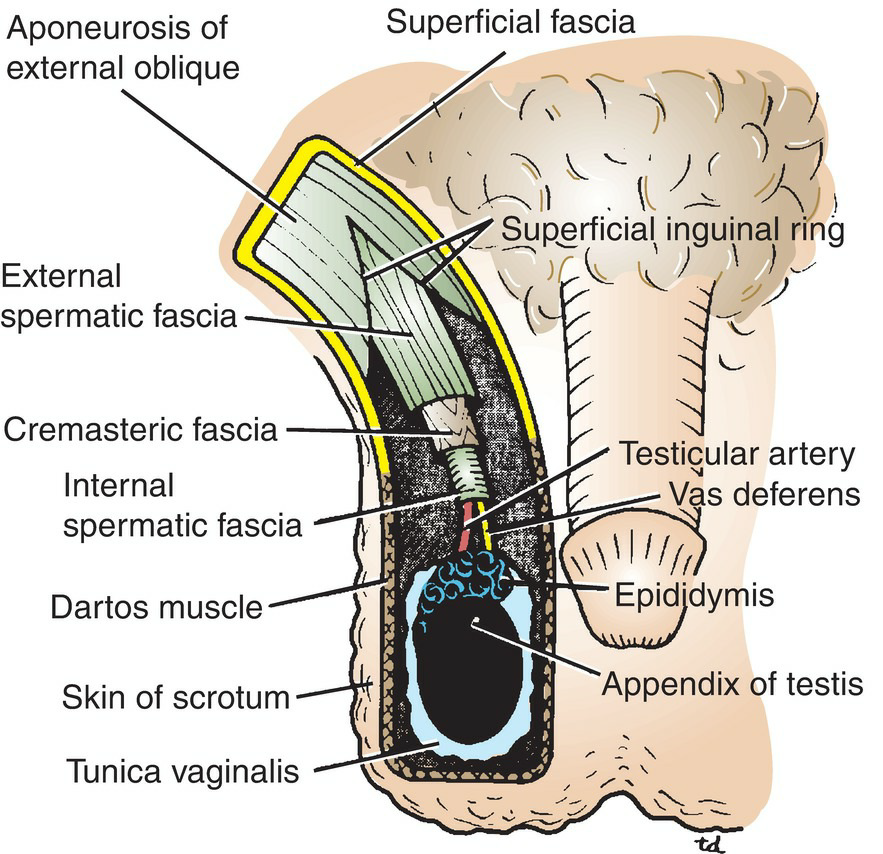
Figure 6.12 Scrotum dissected from in front. Note the spermatic cord and its coverings.
The inguinal canal is formed in this manner in both sexes. (In the female, the term spermatic fascia should be replaced by the covering of the round ligament of the uterus.)
Meanwhile, a band of mesenchyme, extending from the lower pole of the developing gonad through the inguinal canal to the labioscrotal swelling, condenses to form the gubernaculum (see Fig. 6.25).
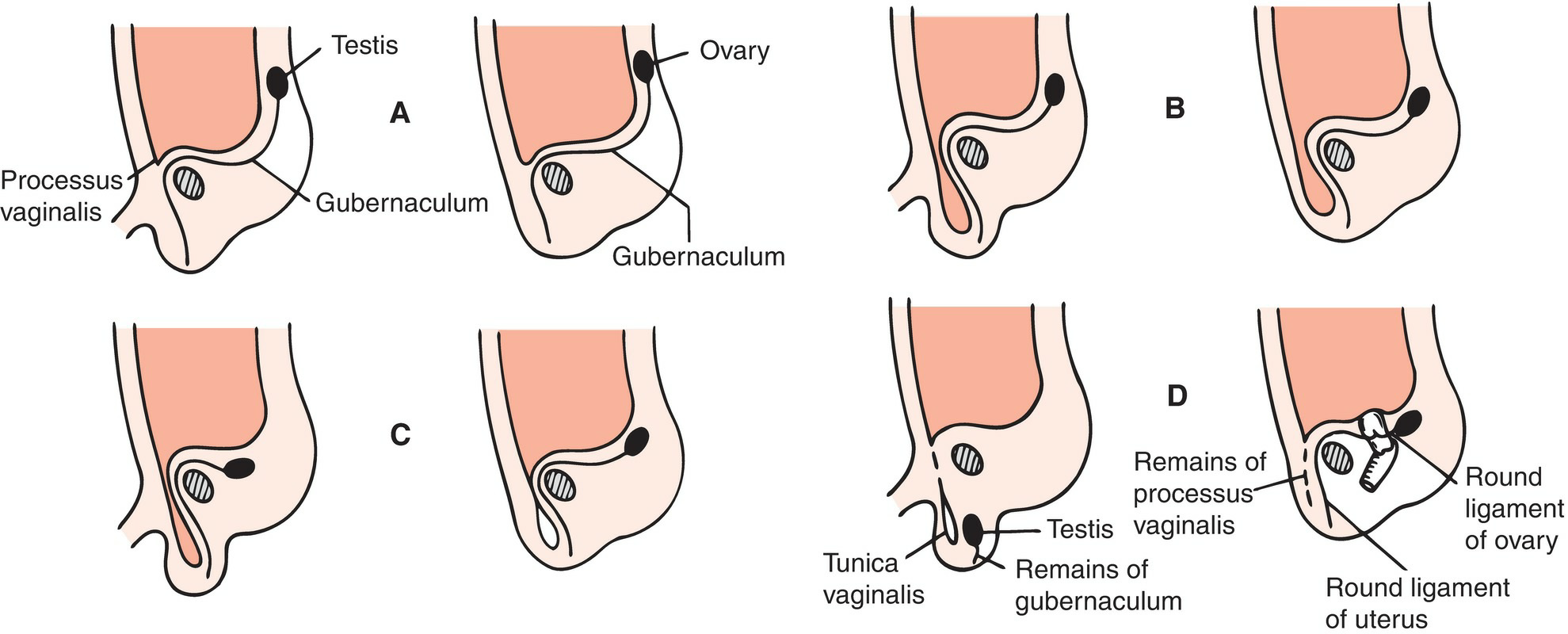
Figure 6.25 Origin (A), development (B,C), and fate (D) of the processus vaginalis in the two sexes. Note the descent of the testis into the scrotum and the descent of the ovary into the pelvis.
In males, the testis descends through the pelvis and inguinal canal during the 7th and 8th months of fetal life. The normal stimulus for the descent of the testis is testosterone, which is secreted by the fetal testes. The testis follows the gubernaculum and descends behind the peritoneum on the posterior abdominal wall. The testis then passes behind the processus vaginalis and pulls down its duct, blood vessels, nerves, and lymph vessels. The testis takes up its final position in the developing scrotum by the end ofthe 8th month.
Because the testis and its accompanying vessels, ducts, and so on, follow the course previously taken by the processus vaginalis, they acquire the same three coverings as they pass down the inguinal canal. Thus, three concentric layers of fascia cover the spermatic cord: the external spermatic fascia, the cremasteric fascia, and the internal spermatic fascia.
In females, the ovary descends into the pelvis following the gubernaculum (see Fig. 6.25). The gubernaculum attaches to the side of the developing uterus, and the gonad descends no farther.
That part of the gubernaculum extending from the uterus into the developing labium majus persists as the round ligament of the uterus. Thus, in females, the only structures that pass through the inguinal canal from the abdominal cavity are the round ligament of the uterus and a few lymph vessels. The lymph vessels convey a small amount of lymph from the body of the uterus to the superficial inguinal nodes.