
In the early embryo, a linear thickening of ectoderm appears called the milkridge, which extends from the axilla obliquely to the inguinal region. In animals, several mammary glands are formed along this ridge. In the human, the ridge disappears except for a small part in the pectoral region.
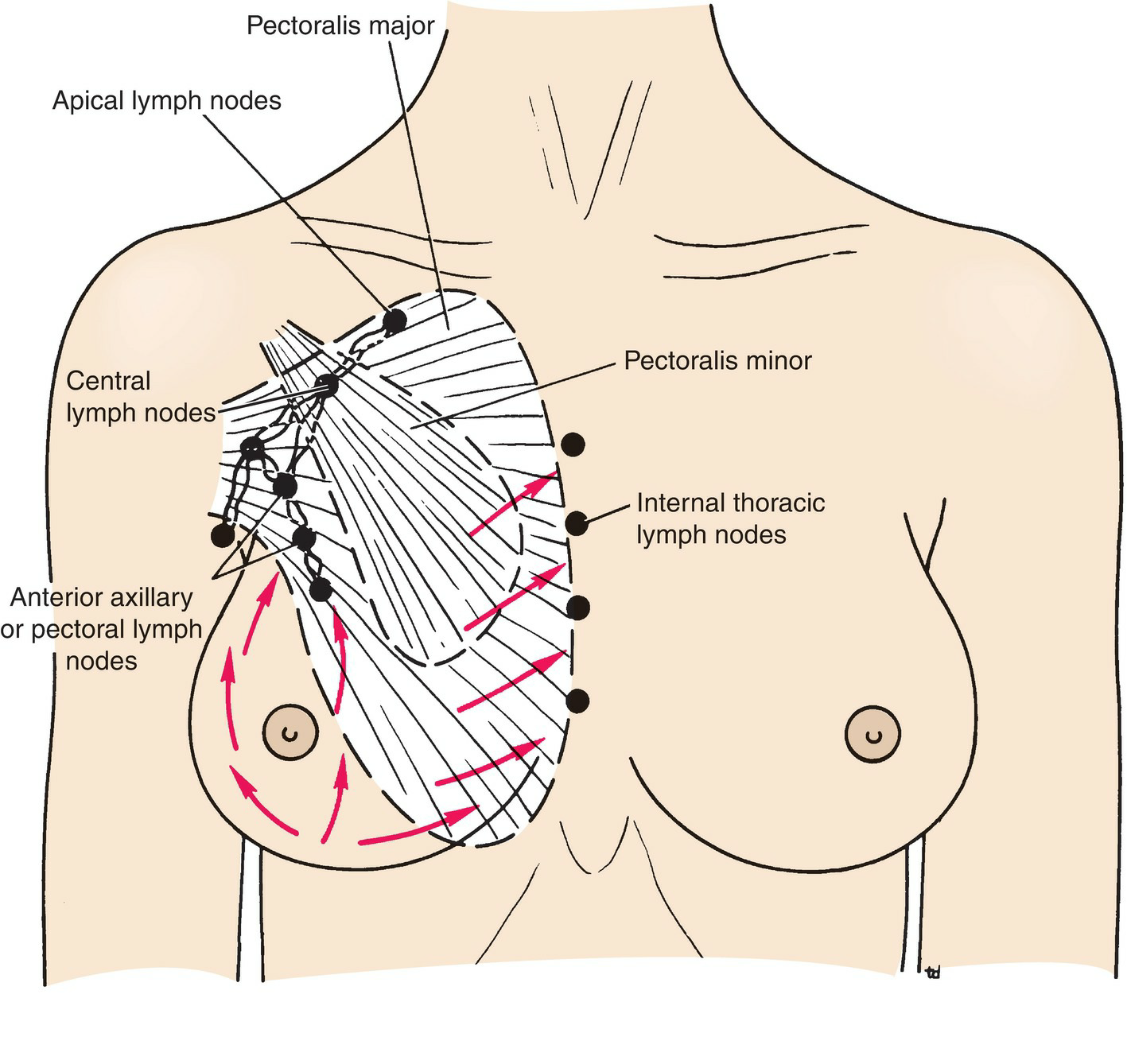
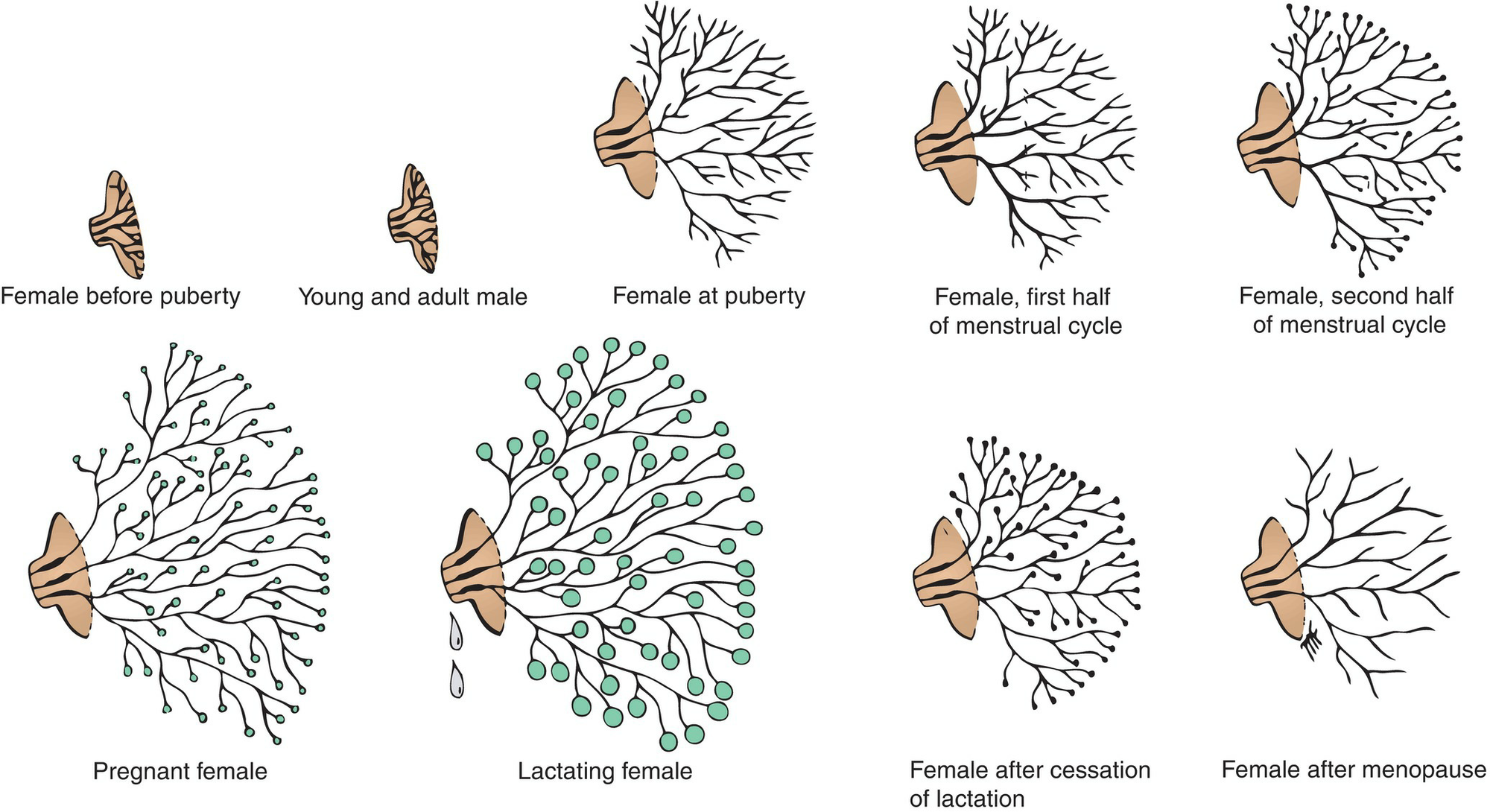
This localized area thickens, becomes slightly depressed, and sends off 15 to 20 solid cords, which grow into the underlying mesenchyme. Meanwhile, the underlying mesenchyme proliferates, and the depressed ectodermal thickening becomes raised to form the nipple. At the 5th month, the areola is recognized as a circular pigmented area of skin around the future nipple.
Polythelia
Supernumerary nipples occasionally occur along a line corresponding to the position of the milk ridge. They are liable to be mistaken for moles .
Retracted or Inverted Nipple
Retracted nipple is a failure in the development of the nipple during its later stages. It is important clinically, because normal suckling of an infant cannot take place and the nipple is prone to infection .
Micromastia
An excessively small breast on one side occasionally occurs, resulting from lack of development.
Macromastia
Diffuse hypertrophy of one or both breasts occasionally occurs at puberty in otherwise normal girls.
Gynecomastia
Unilateral or bilateral enlargement of the male breast occasionally occurs, usually at puberty. The cause is unknown, but the condition is probably related to some form of hormonal imbalance.