Saving a life often comes down to what happens in the first few minutes of an emergency. When the stakes are high, knowing how to prioritize your actions can prevent further injury and ensure the best possible outcome for the victim.
Here is a breakdown of how to handle a medical emergency, based on the latest first aid priorities.
1. Safety First (For Everyone)
Before you jump in, you must ensure the environment is safe for both you and the person in need. Laypeople should only provide medical assistance if they can do so without putting themselves at risk.
- Avoid Hazards: Never enter a burning building or attempt a rescue in a dangerous environment, such as on a steep cliff, without proper equipment and training.
- Protect Yourself: Always follow “universal precautions” by treating all blood and body fluids as potentially infectious (to prevent the spread of diseases like HIV or Hepatitis B and C).
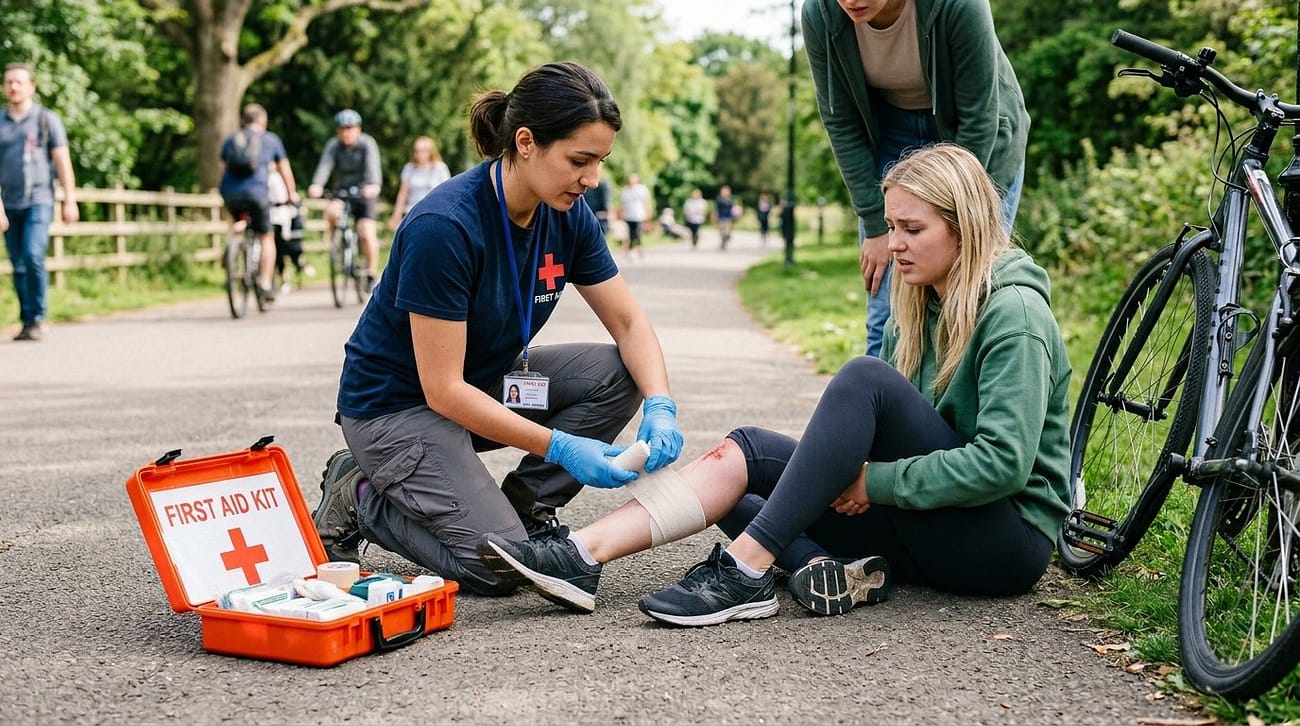
- Use Barriers: If possible, wear latex or nitrile gloves. If those aren’t available, use plastic bags or any waterproof material to cover your hands.
2. The ABCs: Assessing the Life-Threats
If a person is unconscious or unresponsive, your first priority is to restore and maintain their “ABCs”: Airway, Breathing, and Circulation. A failure in any of these three areas can be fatal within minutes.
- Airway: Check if the passage to the lungs is blocked, which can happen during choking.
- Breathing: Look for difficulty breathing, which can be caused by conditions like asthma or emphysema.
- Circulation: Ensure the heart is pumping; blood flow stops during cardiac arrest.
3. Immediate Life-Saving Actions
Once you’ve assessed the situation, you should immediately begin emergency care if it is safe to do so:
- For Choking: Use abdominal thrusts (the Heimlich maneuver).
- For Cardiac Arrest: Begin Cardiopulmonary Resuscitation (CPR).
- For Bleeding: Apply direct pressure to any visible wounds.
4. Getting Professional Help
Calling for emergency services is the next critical priority. In the U.S., call 911 and provide the dispatcher with a full description of the person’s condition and how the injury happened.
- Stay on the Line: Do not hang up until the dispatcher tells you to.
- Divide and Conquer: If others are with you, have one person call 911 while the other starts first aid.
- If You Are Alone: Start emergency care first before stopping to call for help.
5. Triage: Who to Treat First?
In situations where multiple people are hurt, you must perform “triage” to decide who needs help most urgently. This assessment should take less than one minute per person.
| Priority Level | Description | Examples |
| Life-Threatening | Immediate danger of death. | Massive bleeding, inability to breathe, or coma. |
| Urgent | Needs care soon, but not immediate. | A painful broken hand or foot. |
| Not Urgent | Can wait for treatment. | Simple injuries requiring only reassurance or a blanket. |
Pro Tip: Don’t be fooled by noise. Someone screaming in pain may be less seriously injured than a person who is quiet because they are unconscious or unable to breathe.
6. Rescue Medications and Information
After calling for help, you may be able to administer specific rescue medications if they are available:
- Epinephrine (EpiPen): For life-threatening allergic reactions (anaphylaxis).
- Naloxone: For opioid overdoses (such as heroin or fentanyl) if the person has stopped breathing.
If the person is unconscious or confused, look for clues about what happened. Bystanders or family members may have essential info, and finding items like empty pill bottles can help emergency personnel provide the right treatment.
7. Clean Up
Once first aid is complete, hygiene is vital. Wash your hands—including under the fingernails—vigorously with soap and water. If soap isn’t available, use an alcohol-based hand sanitizer.