
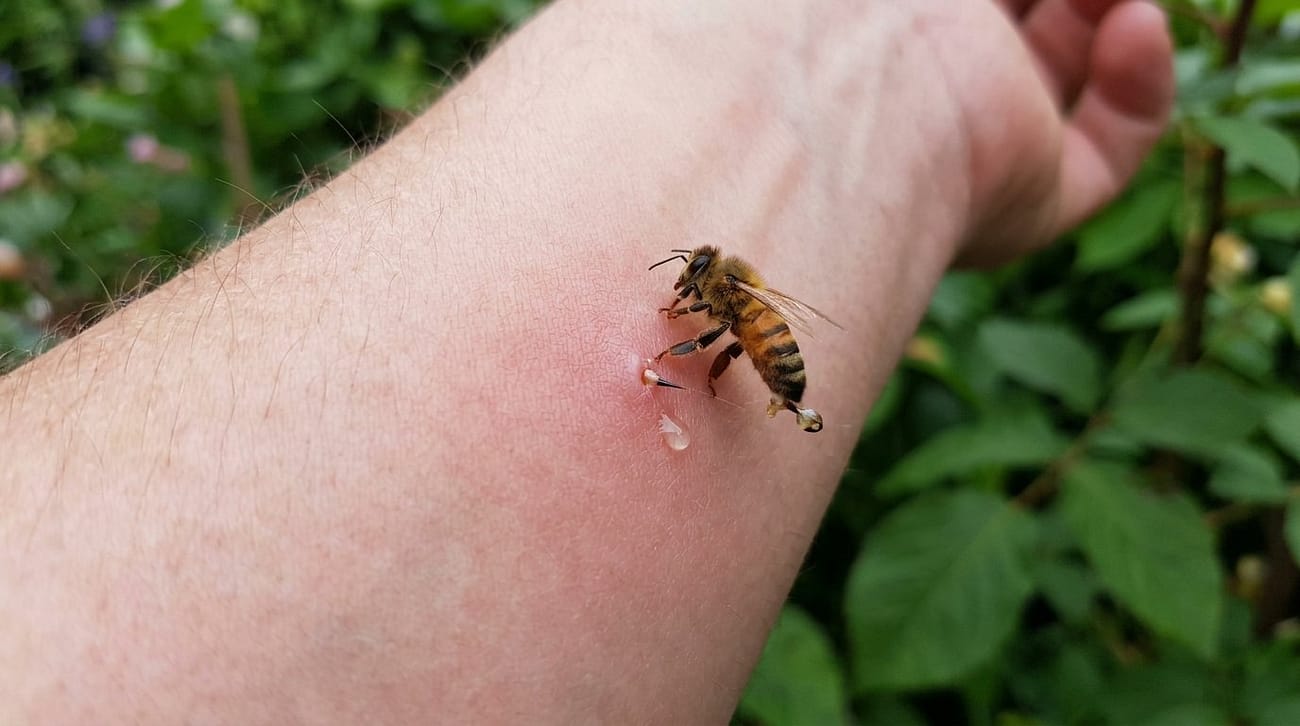
Stings from bees, wasps, yellow jackets, hornets, and some ants are common. These stings usually cause pain, redness, swelling, and itching at the affected area. Although allergic reactions are not common, they can sometimes be severe.
How Dangerous Are Stings?
Most people can tolerate multiple insect stings without serious harm. On average, a person can safely withstand about 10 stings per pound of body weight (or 22 stings per kilogram). This means an average adult could survive more than 1,000 stings, while about 500 stings could be fatal for a child. However, people who are allergic may experience a life-threatening reaction from just a single sting due to anaphylaxis, a severe allergic reaction that causes a drop in blood pressure and narrowing of the airway.
In the United States, deaths caused by bee stings occur three to four times more often than deaths caused by snakebites. Bees generally sting only when provoked. A more aggressive species known as the Africanized honeybee, sometimes called the “killer bee,” has spread from South America into southern and southwestern areas of the United States. These bees may attack in swarms, producing more severe reactions.
Wasps and hornets usually sting only when disturbed, but because they often build nests close to human environments, encounters with people are more common. In the southern United States, especially in the Gulf region, fire ants sting a large portion of the population each year, leading to multiple deaths annually.
Symptoms of Insect Stings
Bee, wasp, and hornet stings typically cause immediate pain along with redness and swelling in an area about half an inch (around 1 centimeter) wide. The area may also itch. In some individuals, swelling can expand to about 2 inches (5 centimeters) or more within two or three days. This swelling can sometimes be mistaken for an infection, although infection after bee stings is uncommon.
Allergic reactions may lead to symptoms such as widespread rash, itching across the body, wheezing, difficulty breathing, and shock.
Fire ant stings usually cause immediate pain followed by a red, swollen area that disappears within about 45 minutes. A blister then develops and typically breaks open after two to three days. The affected area may become infected. In some cases, instead of a blister, a red, swollen, itchy patch develops. When a person experiences a large number of fire ant stings, nerve inflammation and seizures may occur.
Treatment for Stings
Treatment usually involves removing the stinger, applying skin treatments, and using medications to relieve pain and swelling.
When a bee stings, the stinger may remain in the skin and should be removed as soon as possible. This can be done by scraping it out using a thin, dull edge such as the edge of a credit card or a table knife. Wasps, yellow jackets, hornets, and ants typically do not leave stingers behind.
Pain can be reduced by placing an ice cube wrapped in plastic and cloth over the sting site. Oral medications such as nonsteroidal anti-inflammatory drugs (NSAIDs) and antihistamines may also help. Creams or ointments containing antihistamines, anesthetics, corticosteroids, or combinations of these ingredients are often used to relieve symptoms.
Treating Allergic Reactions
Severe allergic reactions, known as anaphylaxis, require immediate medical treatment in a hospital. Treatment may include epinephrine injections, intravenous fluids, and other medications.
People who are allergic to insect stings should carry a prefilled epinephrine syringe prescribed by a doctor. This medication can quickly reverse allergic reactions. Wearing identification such as a medical alert bracelet is also recommended for individuals with known allergies to insect stings.
Preventing Future Reactions
Individuals who have experienced severe allergic reactions may undergo desensitization, also known as allergen immunotherapy, over several years. This treatment can help reduce the risk of serious allergic reactions in the future.


